You are Welcome

Screen Shot 2015-07-10 at 1.39.10 PMWelcome! As the Pan Am and Parapan Am Games are set to start today in Toronto, it brings to mind the notion of hospitality and how people are made to feel welcomed into a physical or digital space. Are there commonalities to how people should be treated when they are new, visiting, or present in someone else’s domain? How do our actions help others feel good or deter them from entering our communities, homes, or digital spaces?

This topic first caught my attention in Rhizo15 where Maha Bali shared thoughts about hospitality in two blog posts – Secondhand Derrida & Hospitality, Hospitality and Invasion. This idea of hospitality and being welcome has been bouncing around in my head since those thought provoking posts. With the influx of guests participating and viewing the upcoming Panamania, how are they being ‘welcomed’ both individually and connectedly? My recent experiences of playing host to company from out-of-town and being a guest in another person’s home emphasized how being hospitable and welcoming makes people feel. How do these models of hospitality relate to digital learning spaces?

Welcome mat

It’s more than laying out the welcome mat. There’s preparation to be done – food, beverages, sleeping arrangements. Thoughts focus on the other person – what do they like, need, or do. Making logistical arrangements for transportation, activities, entertainment and physical needs have to be planned and prepared. That’s even before the guests arrive. While they are present, it’s about being attentive, available, engaging and responsive. It’s not always a perfect fit because there are human emotions and behaviours involved, but it’s worth working on if we want people to come together.

“Hospitality exists within lived experience; it is a gift given by the ‘host’ to the ‘guest’, and then shared between them.” (O’Gorman, 2006)

For the Pan Am and Parapan Am Games, Toronto has invested billions and preparations have taken years to complete. Now the welcome mat is laid and the guests are arriving. It’ll start with a party and end with a bang. In between, there will be lots of entertainment, events, food, accommodations and logistics to manage. The web site is a hub of information and the app will keep people up to date. Merchandise, social media, a theme song, and newsletters will connect memorable moments in the present and for the past.

For my own visitors, it wasn’t about the party or the big bang. It didn’t involve tweeting about events or highlights. Hospitality for guests in my home involved cleaning, changing bed linens, preparing food, and planning some outings with rest and conversation between events. It included paying attention to providing drinks or comforts (e.g. pain medication for headaches, ashtrays for the smokers) while still engaging in conversations and enjoying laughs together.

“Absolute hospitality requires that I open up my home and that I give …… to the absolute, unknown, anonymous other, and that I give place to them, that I let them come….” (Derrida in O’Gorman)

In digital spaces, before a course or online learning activity begins, there are lots of elements to consider. Since the ‘guest’ or learner is unknown, there are many elements that, carefully planned and structured, may need to be adjusted as the participants arrive. The presence of the host is essential throughout the time any ‘guest’ is in the learning space. The host is an active participant in the conversations and laughter. The best online learning spaces are co-hosted or prepared by a team because the work is shared and collaboratively constructed. While one host is sharing and updating content and may forget to check on the discussion forums, another can focus on those, so together the course runs smoothly.

While hosts in online and digital spaces may not be preparing food or changing linens, redirecting traffic or building accommodations, there is lots to be done prior to the unknown guest’s arrival. Creating and designing a system of learning that is intuitive, engaging and sustainable requires a logistics expert. Recording an intro video, capturing a weekly summary, making personal contacts, inserting thought provoking prompts, responding to questions, re-directing when misunderstandings occur, building and scaffolding learning activities, and managing time are all hosting requirements within digital spaces. Hospitality is hard work.

“The very precondition of hospitality may require that, in some ways, both the host and the guest accept, in different ways, the uncomfortable and sometimes painful possibility of being changed by the other.” (Derrida in O’Gorman)

So there is the challenge not only for large sporting events, home visits, or online learning. Change is going to happen. It may be difficult at times. Patience may be stretched and limits may be reached. The relationship between host and guest will forever be changed by the lived and shared experience. The memories, be they good or bad, will be shared and reflected on – with a collection of images, videos, artifacts and tokens. This is the reason hospitality is so important – it is a gift of generosity and friendship. It changes people, ideas and practices. It makes the world a better place – to share interests, share laughter, share moments. Together host and guest can ‘cross thresholds of hope’. So, please come in, sit down, share a story, and stay awhile. You are welcome here.

References

O’Gorman, K. D. (2006) Jacques Derrida’s philosophy of hospitality. Hospitality Review. 8(4), 50-57. https://pureapps2.hw.ac.uk/portal/files/4162817/Jacques_Derrida_s_philosophy_of_hospitality.pdf
Posted in Talking, Together | Tagged , , , , , , , , | 1 Comment

It’s a Scarf!

I’ve been on holiday, spending time with family and friends. During this time the conversations turn to technology, as it often does when I’m around. I tried to explain what I’ve been doing and describe the people I’ve shared my time with over the past several months. That’s when my digital friends became real – they’re not just part of my imaginings or bits of code at the other end of a tweet. As fascinating as it sounds to my face to face family and friends, it’s a real connection to people I may never see in person.

While trying to explain my digital life (which consumes many hours for most days) I had to find ways to describe what it’s like to engage in a twitter chat to people who don’t know what Twitter is all about. I had to find words to explain what a MOOC is and why I’ve been mooc-ing around since #MOOCMOOC Critical Pedagogy first got me engaging in open learning spaces. Getting past twitter and mooc’s led to discussions about the people I’ve met online – no matchmaker.com involved! It’s hard to describe to those who’ve never been there or done that. Which brings me to the scarf!

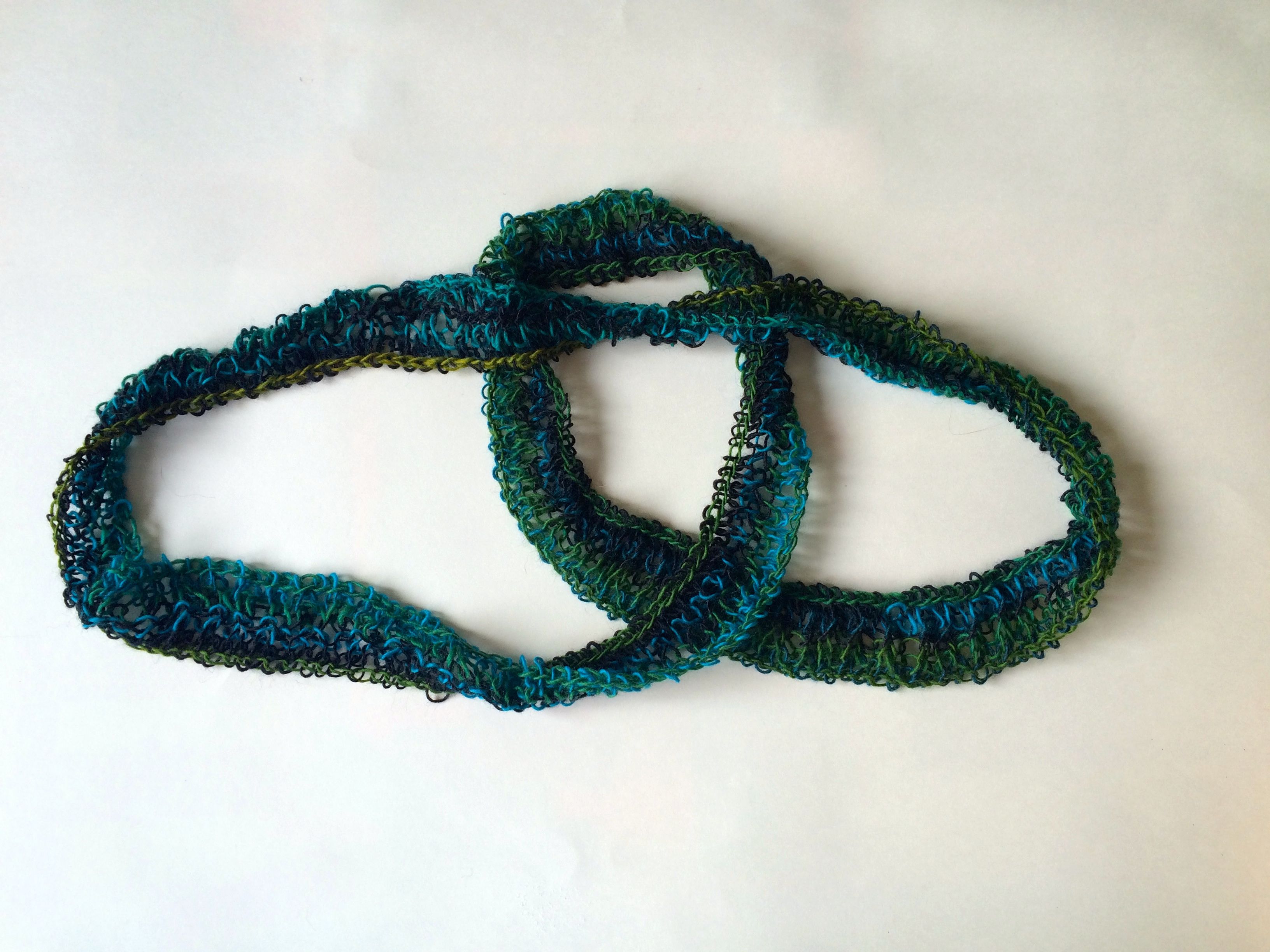
My daughter was picking up the mail while I was away on holiday and I received an excited text about a package that had arrived from Scotland. Since I was in a crowded family gathering at the time of this text, it naturally devolved to ‘who do you know in Scotland?’ So now I can bring my digital connections into reality with friends and family – thanks @NomadWarMachine for perfect timing and the lovely infinity loop scarf! (I knew immediately that the package was from you, Sarah.) It brought clarity to my descriptions of the digital world and the real connections. Like the scarf, it wrapped around the ideas, the notions of friends and family in far off places and became a symbol of how Twitter and MOOC’s can bring people together.

So thanks to all those people out there working hard to create MOOC spaces for others to come together, to learn and share, to create and tinker – @HybridPed@ISTE_OLNetwork,  SOOC4Learning#HumanMOOCRhizo15, and CLMOOC.

Thanks to all those who spend time organizing twitter chats to bring like minded learners and educators into digital conversations – there are so many available HERE.

infinityYour efforts make a difference to so many! Here’s a scarf for you!

And for Sarah – you make it all real! Thanks.

Posted in Talking, Technology, Together | Tagged , , , , , , , , | 4 Comments

Making it work

So often it just doesn’t work! There’s always some glitch, some little thing that just won’t go the way you thought. Tech can be funny that way. If you approach your making or tinkering with any new app, tech or task with the notion that something certainly will not work out, then frustrations can be minimized. Finding your way through, tapping into your support network and connecting when you get stuck are great ways to keep a project on track. But your mindset is a key factor. Making it work doesn’t come with a ‘that’s easy’ button. Trying, making mistakes, redoing your work, editing, scrap-it and start over are all valuable options when you can’t make it work. The one thing you need to remember when tinkering, toying or learning with technology is that making it work is what’s it about.

So, making it work means trying new things. Here’s my latest ‘making it work’ exploration. Memes and creative posters are enjoyable – there’s inspiration and wisdom nestled within, something that prompts thinking or makes you chuckle. My first make for the CLMOOC experience was done in imgflip. The image was chosen when I noticed on the CLMOOC location map that there were no Canadians pinned on the map yet. This was my nod to my Canadian context!

Screen Shot 2015-06-18 at 10.31.59 AM

Then I created a gif from a short video clip and added a title since ‘that’s easy’ came to mind. Not sure if this button is found in global contexts but it was a big thing here.n2v60

Technology is not always easy, but that’s ok. It’s a matter of being comfortable in perpetual beta. It’s knowing when to take a break or taking time to connect to others who are working through similar tasks, challenges, or experiences. That’s how learning becomes connected. That’s how to make it work.

Which technologies are easy?

What tools or apps have challenged your ‘make it work’ attitude?

Where do you find your supports to ‘make it work’?

Posted in clmooc, Talking, Technology | Tagged , , , , , | 2 Comments

A Post Rhizo Post – What’s Next?

It’s funny how something gets into your head and keeps moving through your thoughts. Sometimes it’s a good think – one that confirms and encourages. Other times, it’s insidious thinking that shakes your confidence.  Sometimes it’s like the Lambchop song, the one that never ends – it’s just there, rocking through the rhizomes. After my experiences with the Rhizo15 course ended, my learning and connections continued. All along the way, I’m comparing my online experiences with Rhizo 15 where there was no content, no objectives, no exemplars and no assessment. There’s much to be learned about learning in open, digital, fluid, community spaces.

bookMy life is a course! I have continued to rhizomatically and serendipitous learn …. and this is what happens when you let learning find you.

  • I continue writing – focussing on the human elements in electronic teaching and learning spaces, while finding the ‘self’ in what others say, do, present in digital spaces. Through the writing process my ideas become clearer. As I write (and rewrite) my understanding is enhanced and connections become evident. Some of this writing I do within open and collaborative spaces, while some is privately constructed or developed for later publication. I’d like to write collaboratively again, but for now it’s a solitary endeavour. I’m writing about how video can humanize, how being human improves digital communication, and how technology can connect our digital stories.
  • As I explore the area of using video to humanize online learning, I was encouraged by Kendra Grant to explore Touchcast. This digital tool enables interactive video to be created in a whole new way. There is much to discover with this technology and I hope to post about my experiences soon.
  • I serendipitously continue to find links and participate in open, accessible spaces. By following the twitter feed from the HASTAC 2015 Conference I discovered interesting connections to ideas, research, and people applying digital and social media elements to teaching and learning. These connections lead me to my first recorded hangout.
  • I’ve watched and listened to many hangouts before but participating took me to a different place and space while I engaged in new thoughts with new thinkers. This dialogue was with conference participants (Andrea Rehn (@profrehn), Mia Zamora (@MiaZamoraPhD), and Anastasia Salter (@AnaSalter) and those connecting virtually (Autumm Caines (@autumm), Scott Johnson (@SHJ2), Maha Bali (@Bali_Maha),  Rebecca J. Hogue (@rjhogue), and myself. The recording is presented below. The conversation was rich and lots of ideas about teaching and learning were discussed. I suspended my sense of self and location while I became present with others. During this experience, my sense of the ‘digital me’ who is not me, but really is me, resurfaced. Digital identity, online persona, being human within a non-human medium, and how we adapt technologies to humanize rather than digitize learning will continue to be areas of interest. It was interesting to read Beyond Twitter: Virtually Connecting at Conferences since many my own experiences were reflected in this article.

  • After this virtual hangout, the experience of sharing conference experiences beyond the hangout got me thinking about how presence using technology is changing. I came across an article written by Bryan Alexander about attending a conference using a ‘Dobblebot’ (his term). I investigated a little further and contacted Double Robotics to see what this technology does. Within a few days I was test driving a bot from my desk to the secret location of the bot in a room somewhere. A conversation with Jason from Double Robotics helped shift my thinking about the potential for this technology beyond the novelty of remotely operating an iPad/bot around a room or conference. I’d certainly like to extend my experiences with virtual conference attendance in mind.
  • Screen Shot 2015-06-17 at 8.46.59 PMMy conference proposal for ECOO BIT15 in the fall of 2015 was accepted. I’ll be sharing a half day workshop titled Inquiry into Digital Storytelling.  This will be an exciting way to share my learning and support the learning of other educators. Now I need to unlearn and relearn how to create an open, unbound, supportive space for educators to explore essential questions about creating, applying, and assessing digital stories.
  • Screen Shot 2015-06-17 at 9.06.32 PMI’ve volunteered to work within the professional learning networks through ISTE. The Inclusive Learning Network and the Teacher Education Network will continue to challenge my thinking, support my teaching practice and extend my professional network. Although I can’t attend the upcoming ISTE 2015 Conference, I will participate virtually where and when I can. I’m hoping someone will engage in a hangout (maybe Virtual Connecting will show the way). I’ll also join in remotely to the National Association for Media Literacy Education – NAMLE 2015 Conference since I was scheduled to attend and present but family events come first.
  • My drive and passion for ongoing learning takes me to the CLMOOC space where I will participate and create in a connected and evolving digital knowledge building and sharing space. I’m drawn in by the words ‘making’ and ‘playing’. I’ve presented the ideas of connected learning to students so this will deepen my understanding of what it means, and hopefully shape how I can create this type of experience for my own students.

As I was drafting and rewriting this post, Simon Ensor wrote about Sowing Seeds. His thoughts ring true for me -“Joyfully sow seeds narrowly and widely, nurture saplings, tell stories, share fruit…have a laugh” and “Breezes, spontaneous conversation and social media, even conferences help to carry seed further.” These rhizomatic seeds of learning are spreading further in these early summer breezes. They’ve been planted in my thoughts, in my meandering mind, only to grow in the coming months….. or I’ll just keep spreading more seeds outward. Who knows what comes next?! It’s anyone’s guess!

Posted in Learning, Talking | Tagged , , , , , , , , , , | 3 Comments

Find your way through!

Learning never ends. Though Rhizo15 as a course will have an end, the connections, collaborations and learning will continue. At the end of this Rhizo15 learning process we come together with a celebration, sharing, and reflection on the experiences over time, both alone and together.

Looking back at the variety of artefacts collected and the repositories of information helps learners make connections, make sense or go deeper. Taking a slow walk through the Rhizo15 gardens takes time (since they are located in a variety of social media locations such as Twitter, FaceBook, Google+, blogs, blog comments, media collections). Creating a compilation video can help individual learners, and those who view the collection, review and remember (thanks Sarah for your inspiration) . This allows some to go back, take a closer look, and reflect deeply, before moving on.

Rhizo15 has kept my mind in full ’tilt-a-whirl’ mode for the past six weeks, even when my hands and feet were engaged in other activities. Moments of apparent calm left space for my thinking to mull over ideas, build connections to readings, and go deeper into wondering. This has been a gift given to myself despite the challenges and confusion. There have been many unique moments and elements shared by others throughout this course but the song produced at the beginning was something that I returned to, listened to, contemplated with – and will remain my anthem of Rhizo15. This became the basis for my reflections today. Here is the video production that is a random collection of items to bounce into your thoughts. There is still so much to learn and many more roots, shoots and rhizomes to experience.

I will continue to gather the fruits of learning labour and compile my own collection of artefacts for future reference. This can be found here http://www.hjdewaard.com/rhizo15.html

Rhizo – on!

Posted in Learning, Talking, Together | Tagged , , , , | 4 Comments

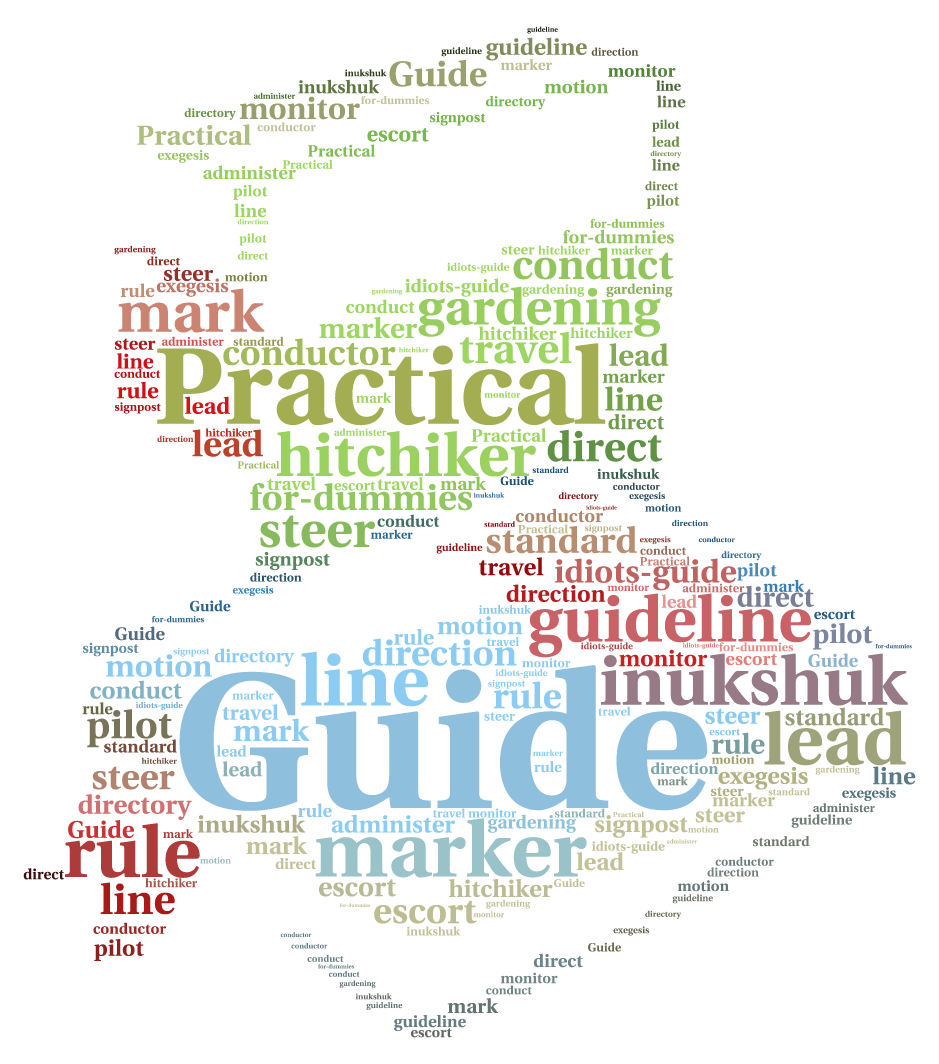
Hitchhiker’s Guide to Rhizo15

To conclude the Rhizo15 learning experience, Dave Cormier prompts all participants to collectively create artefacts and explore or create a ‘practical guide’ to rhizomatic learning.

What is a ‘guide’?  Is it a person or a thing?

I recently purchased a ‘guide to gardening’ – is this what Dave means? Teachers are often referred to as a ‘guide on the side’ – I am beside myself!

In Canada, a guide is frequently needed to traverse through forests and manage river travel. I could guide someone through a rhizo experience since I’ve been through it, somewhat. Would I be a practical guide? Will I stand as a guide-marker like an inukshuk, pointing the way for those who follow?

What can a guide to guides teach us? Many guides have been written about so many topics, (not to mention “Idiot’s Guide to…” or “….. for Dummies”). It is a challenge to select a few for consideration, ones that have some connections or provide a model to Rhizo15.

The Hitchhikers Guide to the Galaxy reminds us that space is infinite, a place where travellers should expect the unexpected. For Rhizo15 this guide reminds us that learning and/or teaching is unbound by time or place and cannot be designed – “A common mistake that people make when trying to design something completely foolproof is to underestimate the ingenuity of complete fools.” (Hitchiker’s Guide). This guide also reminds us not to panic and that – “It’s a tough galaxy. If you want to survive, you’ve gotta know…where your towel is.” (Wikiquote) For Rhizo15, this type of guide would ease the way for those who find rhizomatic spaces full of unusual creatures, puzzling events and uncertain directions.

Sibley’s Guides to Birds and Trees in North America provide a ‘holistic’ approach to identification based on features, characteristics, behaviours, differences/similarities and probabilities. These guides help people quickly determine patterns and the ‘gestalt’ of the item under consideration. They are described like a map rather than a key. For Rhizo15, a guide of this type would help examine patterns of conversations in twitter, explore features within readings or creative ventures, or analyze the differences/similarities found in the created works of participants. Mapping the rhizo15 learning experience is subjective but common characteristics can be seen in the interactions, actions, and patterns.

The Farmer’s Almanac is the ultimate guide to all things plant and weather related, as well as community events, recipes and more. Since 1792, this digest has provided a compilation of tips, advice, puzzles, trends and historical perspectives. It’s been the ‘go-to’ location for those living close to the land – a trusted source for honest information. For Rhizo15, this type of guide should be written and compiled by those who experience and explore, the voices from trusted sources, to bring forward information and tips needed by those who live close to the land of learning rhizomatically.

If you travel anywhere in the world, chances are you’ve glanced at a Lonely Planet Guide. These guides can provide highlights and tourist locations, items of interest or key features, as well as tips on accommodations, legal matters, and ways to get around. When reviewing travel guides, such as this guide to Discovering Canada, it’s important to notice that sometimes it’s what is NOT included that could be the most interesting experiences. For a guide to Rhizo15, providing tips to the ‘spaces’ and elements that are not included, should be evident, since it’s into these open, uncharted spaces that learners will discover themselves.

SO…. here’s One Hitchhiker’s Guide to Rhizo15.

Get on Board: You can’t experience the journey, travel the planet, or take a look at the trees unless you’re onboard, online, on track. Making a commitment to DO IT, engage and experience from beginning to end is important. Contribute in whatever way you can, whenever you can, with people who reciprocate. We are not all exceptional at spotting unique bird species or locating out-of-the-way restaurants, but we can contribute in some way to the experiences of all. Since Rhizo15 occurs in a multitude of digital spaces, don’t let that deter you. Don’t panic and remember where you put your towel.

Plant Something: When going into the Rhizo15 space, it’s okay to get the ‘lay of the land’. It’s good to know the plant hardiness zones (for Canada) because these outline what types of plants can tolerate certain conditions. Find a sunny spot, sheltered from the wind, with one or two fellow rhizoers, to plant something – an idea, a poem, a poster, a joke, a song, a recipe, or anything you find interesting. Don’t be afraid it won’t grow – rhizomatic learning is surprisingly resilient.

Explore highlights, but don’t be afraid to get off the beaten path: Guides – paper or person – can only take you so far. They can point out some important features but sometimes the best learning happens when you get lost, get off the beaten path, dig deeper into unknown areas. Finding a hidden gem, then sharing it, brings new connections, ideas or concepts to light. Working through rhizomatic learning experiences requires time to wander, wonder, and just work around some ideas, problems, interesting puzzles. These unknown spaces can bring forward some interesting insights.

Acknowledge Feelings: Make sense, make connections and make sure you check in with how you are feeling as the rhizo-learning experience evolves. Find a trusted source (you’ll find some in the Farmer’s Almanac of Rhizo Learning) to talk to, listen to, refer to – watch and learn or step away from the edge if the space is getting too uncomfortable. But don’t give up – look for patterns, find key features, focus on the ‘gestalt’ and keep your comfortable towel handy, but keep on going. The struggle, uncertainty, uncomfortable space will reveal unbelievable vistas if you relax and ride along.

There is NO Guide!  Not a book, not a map, not a tip sheet or expert at your elbow. The beauty of rhizomatic learning spaces is found in the serendipitous moments where you hear yourself say ‘aha’. The wandering path through blog posts, twitter comments, google spaces won’t lead to anywhere or anything that you are not ready to find. No guide can point out the highlights – those are yours to find. No guide can point the direction – it’s wherever you wander. No person will stand at your side and say “look here”. You’ll pass whole planets without a blink only to find a golden nugget in one sentence written by a fellow rhizo-learner and a new universe may be revealed.

For all who hitchhike through the rhizome – some thoughts from T.S.Elliot

We shall not cease from exploration
And the end of all our exploring
Will be to arrive where we started
And know the place for the first time.
T.S. Elliot
Posted in Learning, Talking, Together | Tagged , , , , | 5 Comments

Minding my garden – a #Rhizo15 reflection on teaching

Mary, Mary, quite contrary,
How does your garden grow?
With silver bells and cockle shells,
and pretty maids all in a row.

Am I minding my garden as I teach? How does my garden grow? Is it only about beauty and order, or are rhizomatic moments allowed space to grow? Are teachers necessary in the garden-style classroom? How do ‘un-Dave’ moments allow for richer growth?

Classrooms can sometimes resemble wild and remote gardens, jungles of learning, or sometimes tended and tilled, managed into English garden perfection. Sometimes it’s somewhere in-between. A teacher/gardener is mindful of the nature of the garden in which they work, whether it’s a rhizo style garden or not. Just as hsiao-yun (Not the disappearing teacher) is aware of her context for teaching and the nature of the learners in her garden, so too are  Raymond Maxwell and Kevin Hodgson – each  garden is unique in soils, climate, weather conditions, native plants, transplanted, and non-native species.

Whitney Kilgore and the Human MOOC organizers introduced me to the notion of wayfinding in online learning environments. Gardens often have paths and open spaces where the gardener lays out a way, with or without signage, to get around the garden. The gardener designs and plans out the paths, directing the visitor to discover what lies around the next bend – models from a Canadian context include the Buchart Gardens in Victoria or the Botanical Gardens in Niagara Falls. Teacher/gardeners design the paths, but don’t dictate the direction the learners go or grow – there is some sense of self-direction or serendipity in the garden of learning.

Can the garden grow with/without a gardener – is there learning without a teacher/‘dave’/gardener? Absolutely, but not as effectively or collaboratively. It will grow according to individual needs, with stronger plants subjecting the needs of other individual plants rather than the collective whole. When this happens, disorder occurs, both in the garden and in the classroom. Lisa Lane hints at this in her blog Toppling the Teacher. There is paradox in the losing of individual selves in the disorder of the garden or the unteachered classroom.

In jungle gardens there can be a sense of order in the natural selection of complimentary plants – low-liers supporting the high risers, flowers growing amidst the foliage. However, many plants don’t or can’t exist in this environment while others adapt or find ways to co-exist. Is that what we want for our children in the classroom? Rhizomatic teaching/learning is not ‘Lord of the Flies’ style, so some sense of direction, organization is evident – that requires an ‘activator’ (John Hattie). Even in the wilding, free-range learning that some wish and allow for their students there is a sense of purpose or subjectivity. There is an activator for learning and growing in the garden.

Teacher/gardeners have an internal sense, or learn by experience, how to bring patterns and collaboration among plants – which to place beside others, which will flower sooner or later in the season, so they plan for the compliment in colour, size or features. Supports, guidance, fertilizing, trellis placement, moving plants from year to year, patterns of sun/shade, dictate the work of the gardener. Teaching follows similar cyclic and rhythmic patterns of movement and toil. Classrooms evolve in a similar ebb and flow depending on the length of time spent together and the nature of the plants found in the garden (there’s usually one thistle in the mix, but even thistles have purpose and beauty).

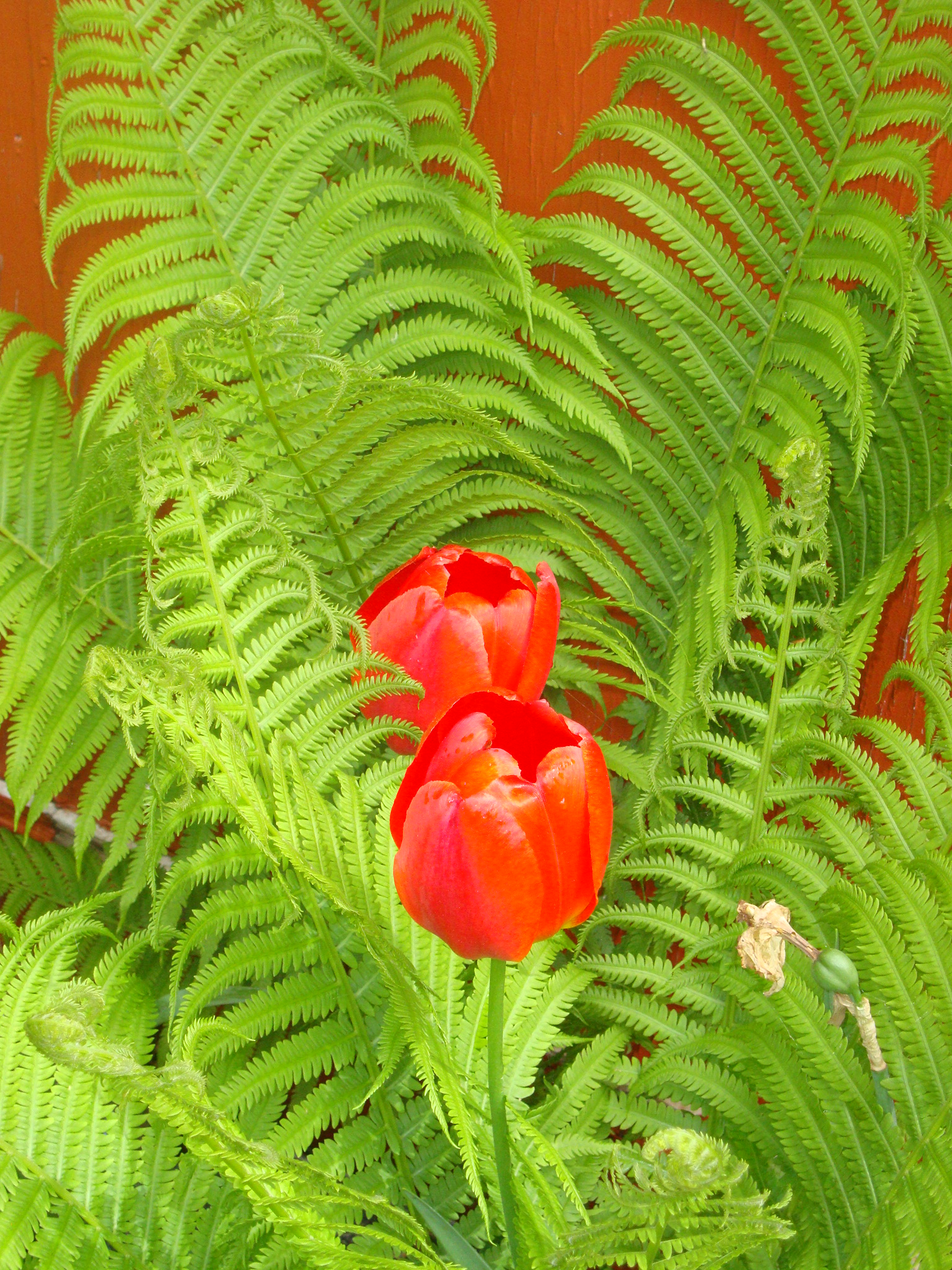
DSC01792Sometimes serendipity and discovery takes over and brilliant results bloom in the garden – students outshine and go further than a teacher every imagined. Sometimes the combinations just work magically together – lilies outshine hydrangeas, morning glories complement hostas. Even wild range plants such as ferns or trilliums can surprisingly co-operate with the cultivated tulips and boxwoods to create colourful combinations.

Teacher/gardeners learn how to work within the garden to create spaces for these possibilities. They take advantage of the knowledge gained about the nature of each plant. They plan to make the most of every characteristic and support the challenges each plant presents. Hardiness, frost tolerance, heat or drought resistance, sun/shade requirements, depth of planting, soil requirements are all part of the underlying knowledge teacher/gardeners bring to their classroom/garden environments. Knowing which plants can be stretched beyond their natural characteristics with some nudging and support is intrinsic knowledge to an experienced teacher/gardener. Knowing when to step up and fertilize, or step back and let it grow, is natural for some teacher/gardeners but not obvious to others. This is also dependent on the context and combinations in the garden – my cottage garden is wilder, closer to natural than the commercialized home gardens found in citified contexts.

Are you are naturalist, horticulturist, ecologist, farmer, cottage gardener, showcase gardener or puttering at gardening?

How does your garden grow?

Posted in Talking, Teaching | Tagged , , | 5 Comments

Counting on Content

My rhizomatic thoughts have twisted and turned in multiple directions in the past two weeks. Sometimes, skimming the surface and gazing fancifully at the sky. Other times, they have gone deep into ideas, burrowing down into the dark, with no light to help focus. So, today, I sit back, reflect and ramble through the thoughts from others to see how these random bits of thread can be woven into something colourful and creative.

content is coffee

What is content?

This image for content, after collecting random quotes from Rhizo15 participants’ blog posts (done here), shows the importance of several key words – conversation, words, people, use, more, end, create, develop, look, think, makes, mean, kind, itself, idea.

I loved Ron Samul’s image of content as the coffee in a cup, or was that the cup? As my contentment spreads with capturing key words and ideas, just as the warmth from my morning coffee, the tangled web of that I was trying to pull apart re-forms and becomes a colourful fabric with warp and weft of meaning. Content is not the coffee or the cup, but the infusion of aromas and flavour consumed. Content is not the rhizome or the mychorrhizae, but the gentle reciprocity of giving and taking. Content is not the weave or the weaver, but the image created from the task of weaving. Content is not the stuff we use to create learning events or the words we exhale to entice thoughts out of darkness.

Content is the elusive thought itself, nestled within. Within the word, within the image,  within our containers of a mind, where each of us individually can make it meaningful.

Content is created, developed, shaped and connected to each of us as individuals.

Content becomes clearer as we share and talk about ‘that which lies within’.

Dave has it right – content is people! I am content! You are content. Your content connects to mine, together we create content within ideas, metaphors, images, containers to show, share and connect to others.

To see the collection of quotes and an interactive image of the coffee cup, visit http://www.hjdewaard.com/counting–content.html

Posted in Talking | Tagged , , , , , , | 1 Comment