
We live with them all the time. We work around them. We anticipate them or get anxious over them. Our lives are filled with due dates.
Holidays are due dates. As we approach Christmas, I’m reflecting on the nature of this holiday as a hard and fast due date. Gifts need to be purchased, wrapped and ready for the date and time we’ll share with friends and family. Food, meals, travel, special gatherings are all planned, adding additional due dates to our schedules. An Advent calendar even helps count down to this due date. Even our own, self-selected annual holidays become a series of due dates with flights booked, bags packed, vehicles readied, or camping gear organized. Some of these major and minor due dates are more stressful than others, depending on how we anticipate the outcomes. How we survive the seasons depends on how we view these due dates.
Some due dates are self-imposed while many are imposed by rules, regulations, and legal considerations. Getting your income taxes done by a certain date or renewing your driver’s license are annual due dates we all work within. When you purchase a house or condo, the closing date becomes a due date over which you have little control, since it is often arbitrary. These due dates impose due dates to so many other people. Lawyers, agents, sellers, buyers, accountants, banks, and family members are all impacted by these due dates.
Life sometimes creates due dates for us. Often they are planned but sometimes these due dates happen without warning. Weddings are due dates that impact a lot of people over a sometimes lengthy period of time, with micro due dates leading up to the main event. This date then becomes an annual due date to be remembered or forgotten, with consequences for both. A retirement due date can be eagerly anticipated for years, yet when it arrives, it can add stress, until it has come and gone. Then life continues with a different set of due dates. The birth of a child is a due date, eagerly anticipated, as days lead up to this special event, and it then becomes an annual due date for birthday parties and milestone markers. Turning 15 in some cultures is worthy of its own due date, while turning 100 means extra special consideration. Maintaining our health sets up a sequence of due dates we shouldn’t avoid, while illness or death become due dates we can’t avoid.
 As a teacher and student, I’ve lived with due dates imposed by the nature of the work and the requirements of the system. The first day of school in September is a due date, as is the last day of school in June. Report cards are arbitrary due dates that add stress to everyone’s lives for a period of time. In higher education, due dates abound, outlined by systemic expectations, e.g. getting applications in by a certain date and time, or by course schedules e.g. assignments and exams. Again, how we react to the many due dates within a classroom or learning schedule, with the ebb and flow of getting things done, can impact our view of the work of teaching and learning.
We need these due dates. We don’t work well if we don’t have them. When we don’t have them, we delay or defer getting things done. If no-one imposes due dates, we often impose them on ourselves. Having a hard, cut-off point can be a trigger for action. Knowing we have to get something done, submitted, completed, signed, or delivered by a certain time and date gives us the momentum to accomplish tasks. While we often begrudge due dates, they are necessary. We use due dates to add tension to the task, often delaying or procrastinating until the pressure builds to a point of necessary action. Working within these pressure points can be healthy. Unfortunately, due dates frequently become stressors in our lives, when too many due dates collide. We all know Christmas is coming, yet we delay our planning and preparations until there is no more time to get it all done. We all know taxes need to get done, yet we procrastinate in getting the paperwork organized and the numbers calculated. Then unexpected additional due dates become a tipping point that drives us over the edge and into anxiety.
So today, I’m choosing to reframing due dates from an evil to be avoided, to a necessary and supportive friend that helps me get things done in a timely fashion. I’ve had a month filled with some pretty incredible due dates, with additional due dates yet to face before this year comes up to its inevitable due date on New Year’s Eve. I’m reframing these timelines and schedules into a necessary part of my life, something to be welcomed and worked toward.
Just remind me I said this when tax time rolls around in April!!!
How do you look at due dates? What due dates are you looking forward to? What due dates do you dread? What due dates do you self-impose just so you can get things done?
 The focus for Media Literacy Week is Fake News and Fact Checking

 finally meeting
  I’m excited to be speaking at the first every
 There are many educators who believe that the first month should be one of rules and routines. “Don’t smile until December” is something I’ve heard often enough! That’s one ‘rule’ I’m willing to break, in my effort to build relationship and get to know my students on a personal level. Learning their names, even when it’s a large group, is so important. Structuring the climate of the classroom is also important – will there be engagement and fun, or will it be work first, laugh later? I’m happy to say, my students already know my weakness for a chuckle, and my bias about the term ’21st Century’.
 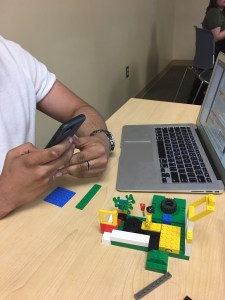 There’s been some serious thinking happening in the first week of work, some shifting in the seats as we tackle some complex concepts – just how do you define media or digital literacy? just what is this critical digital literacy thing all about? But when you start your course or your class with shoe selfies stories and lego mini-fig fun, you can’t help but feel happiness in the media making moments!
 In Unit 4 of the
  To fulfill the requirements of the assignment for this module, I searched Flickr for CC licensed images as well. As a result of the CC compatibility chart that was presented in this module, I was aware of the types of licensed materials I would gather. Here it became more challenging since I limited my search to only images that were CC-BY, because I wanted to license the resulting video as CC-BY, as well as make image annotations to enhance the video production. Many of the images I found were SA, NC, or ND licensed, so they were not selected for this project. As I collected images, I kept a running record that included a brief image description, T.A.S.L (title, author, source, license) information, and annotations created. I used this to create the sequenced image listing for the completed video, in order of appearance. I posted this image listing in a view-only location, and attached the link on the final video.
 Creative Commons licensing that designates works as non-commercial means that anyone using those materials cannot make ANY money for the reuse or reprinting of that content. As a teacher educator, employed in a higher education institution, I need to consider possible scenarios where money could be made using course materials I create that includes items designated with an NC license. For example:
 The share-alike (SA) Creative Commons license designation is a way to say to others – this is my work, I’m sharing it with you, if you use it, you need to share it too! This is a way to ensure your work as an author, artist, creator, is also shared by others who may use your works in a remix or revision. When SA is present on a shared work, those who use that image, icon, music clip or creation are required to also share their version of what they’ve created with your material. This ensures a sustainable, sharing culture and enriches your credibility as a creator, in that your original work is attributed in each new version.


 Five Flames 4 Learning